Automotive UX Design Project (Confidential Client)
As a UX researcher and designer, I collaborated within a small team to reimagine aspects of the in-vehicle experience for a major U.S. automotive client. The goal was to explore how interaction design could improve usability, reduce cognitive load, and create more intuitive driver and passenger experiences.
(NOTE: Due to NDA restrictions, specific details and visuals have been generalized or recreated)
The Problem
How might we design an experience that simplifies complex interactions while maintaining clarity, responsiveness, and usability, especially in a world of rapid technological advancement?
Background Research
In order to better understand the problem space, I worked alongside my team to conduct a competitive analysis of existing solutions within the automotive space. Our goal was to not only see what other companies were already doing within the space, but to also focus on what they weren’t doing, and most importantly to uncover insights as to why or why not.
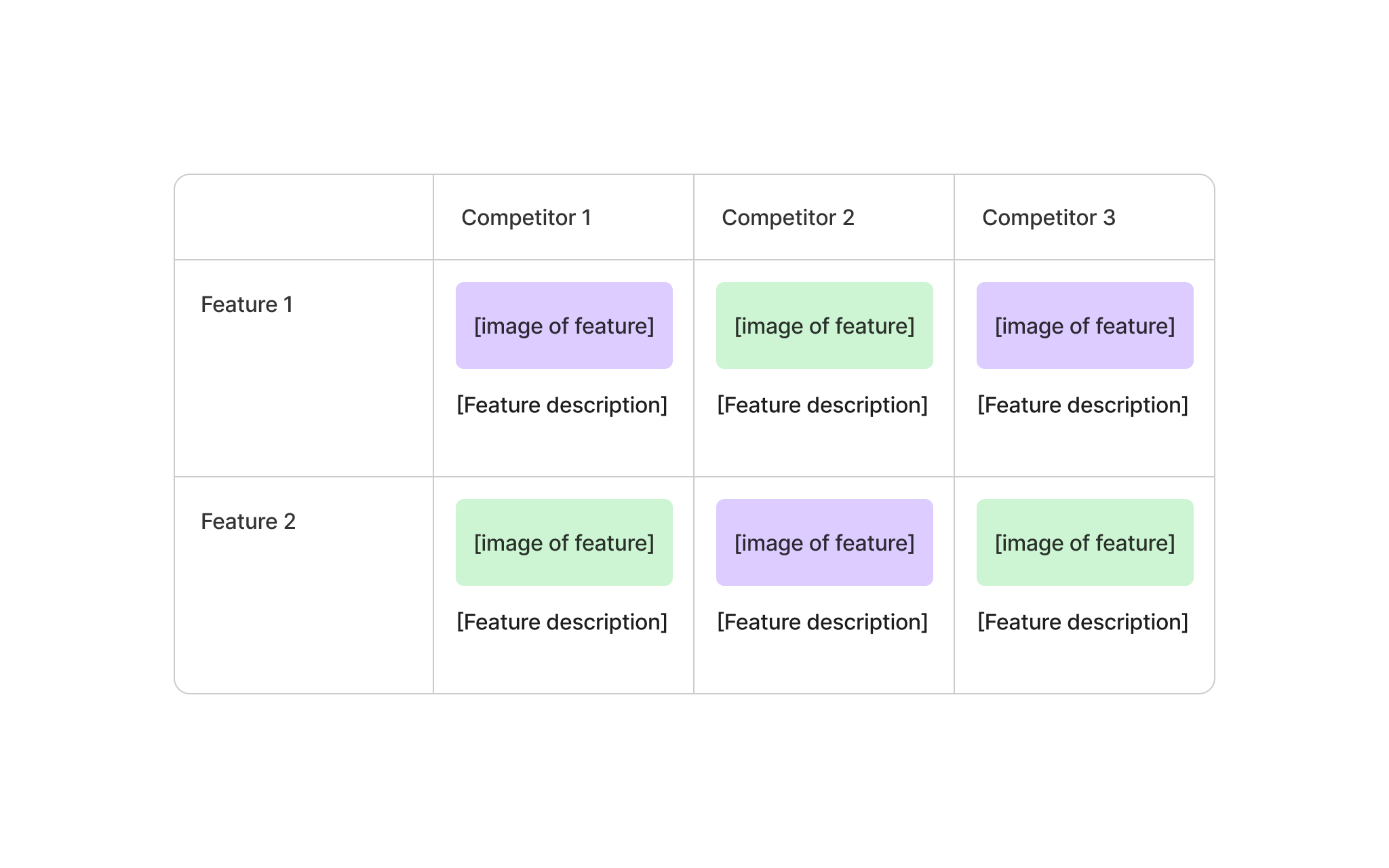
While conducting background research, I quickly realized that if we only looked towards automotive for inspiration, our client would be stuck in a constant game of catch-up: in order to innovate, I recognized that limiting our analysis to automotive would reinforce existing patterns rather than challenge them. To explore more innovative interaction models, I spoke with my team and we agreed to expand our research to include non-automotive digital products and platforms.
Iterative Design Process
Insights from our background research informed our next steps, and a few guiding principles led my team throughout the process:
Users have diverse preferences and contexts, and benefit from systems that allow flexibility and personalization rather than fixed interaction patterns.
Users prefer interaction methods that align with their habits and minimize cognitive effort, especially in environments requiring quick, low-attention inputs.
Consistency across digital environments helps reduce learning curves and enables more intuitive interactions.
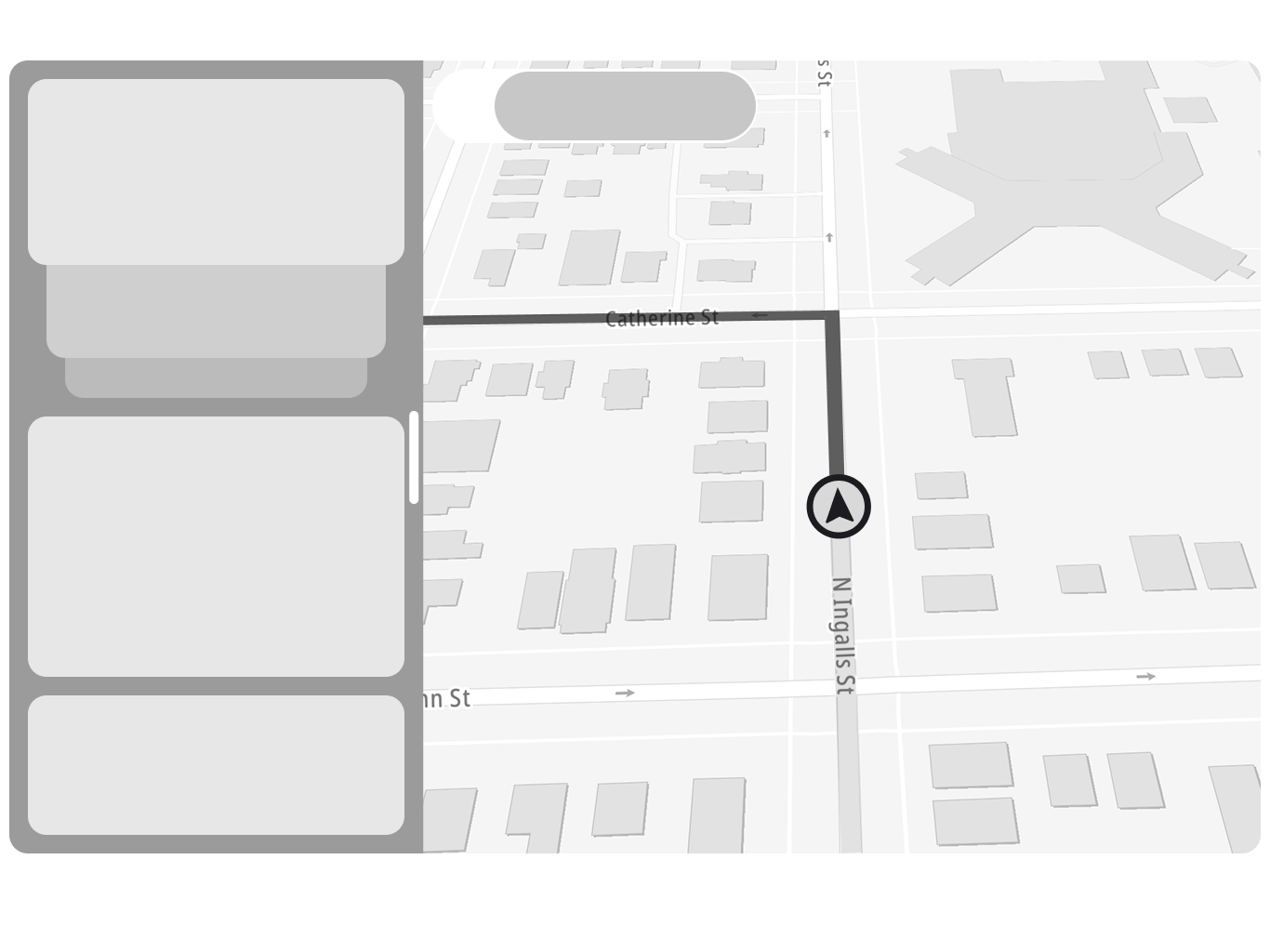
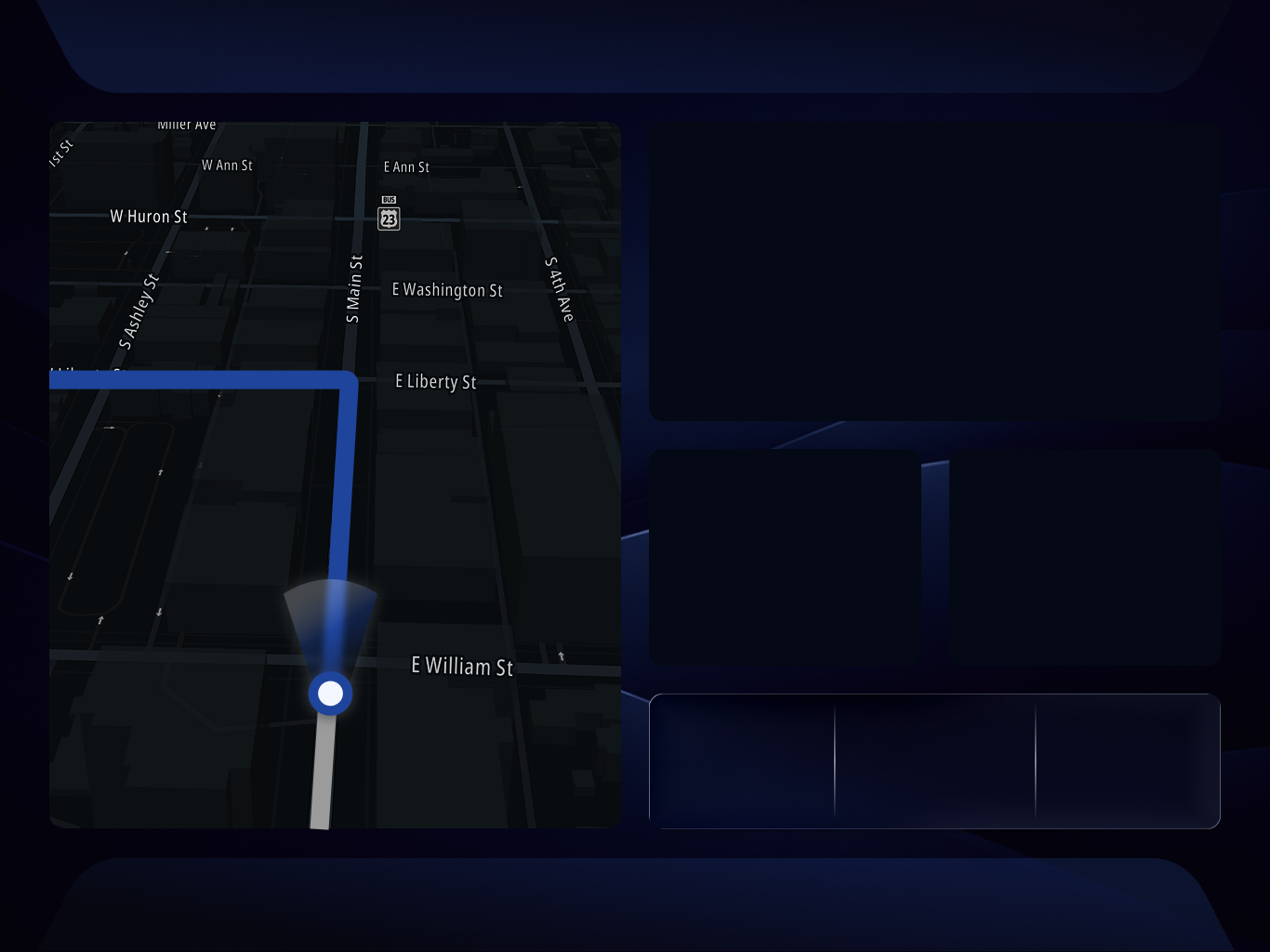
We kept these principles in mind as we went on to ideate on our collective ideas before ultimately converging on a set of low-fidelity wireframes, followed by user testing, client feedback, and ultimately high-fidelity interactive prototypes.
Stakeholder Feedback
Throughout the design and iteration process, we held meetings and check-ins with our client, presenting our progress and novel ideas and concepts before incorporating their feedback into subsequent iterations.
This ensured alignment between user needs, technical considerations, and broader product goals.
Physical Prototyping
To better understand real-world interaction, we incorporated 3D-printed components into our user and internal testing, in order to simulate real-world, physical touchpoints and spatial relationships.
This helped us ground our digital prototypes in the real world, and helped us spot usability issues we might have otherwise missed.
Outcomes
The project resulted in a set of forward-looking UX concepts and interactive prototypes that explored new approaches to in-vehicle interaction.
By combining research, digital prototyping, and physical modeling, the work demonstrated how thoughtful design can improve usability in complex, real-world environments.
Key Takeaways
Cross-industry inspiration can unlock new interaction patterns
Iteration and stakeholder alignment are critical in complex system design
Designing for physical environments requires blending digital and tactile thinking
Sometimes, we have to look back in order to look forward