Building a Sustainable Tech Talent Pipeline in Detroit
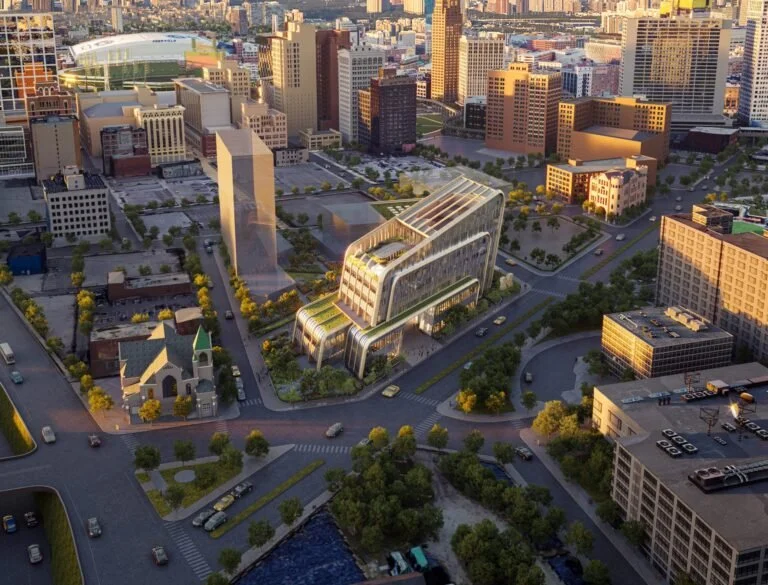
I worked as both a project manager and UX consultant on a team partnered with UMCI to support the vision for a new innovation center in Detroit.
While the initial goal was to explore how the center itself could drive engagement, our team reframed the problem—focusing instead on how to prepare Detroit residents to fully utilize the center.
This shift led us to design programmatic, system-level solutions aimed at building a long-term talent pipeline, rather than short-term fixes to the center itself.
The Challenge
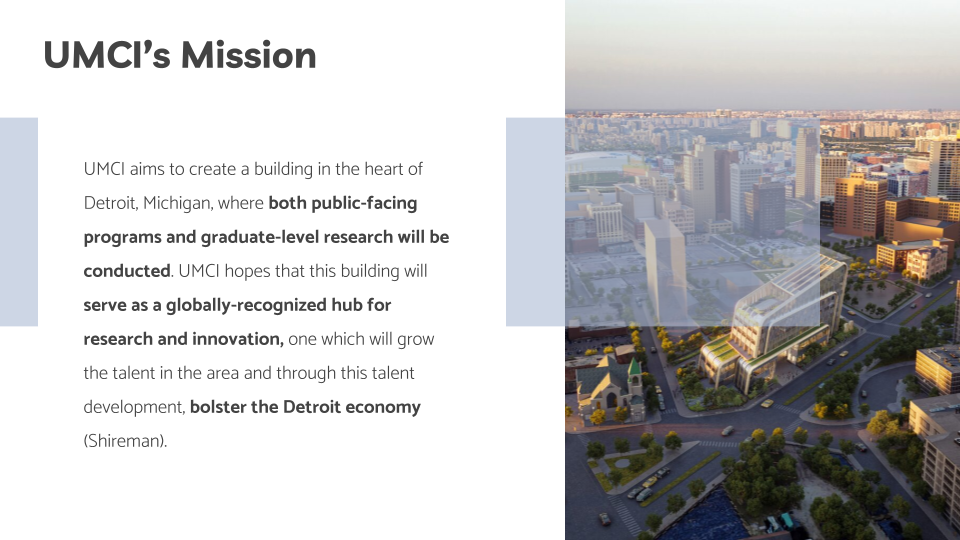
UMCI aims to become a hub for innovation and economic growth—but faced a critical risk: the local talent pipeline was not yet equipped to fully engage with the center’s offerings.
Key question:
How might we prepare Detroit public high school students to access and benefit from UMCI’s programs and the broader tech economy?
My Role
Led project planning, timelines, and task coordination
Facilitated weekly team meetings and partner check-ins
Acted as a UX consultant, guiding research framing and synthesis
Conducted and supported stakeholder interviews
Led affinity mapping and insight development
Helped reframe the problem toward a systems-level solution
Research and Discovery
We used a combination of qualitative and secondary research methods to understand the ecosystem:
Primary Research
Semi-structured stakeholder interviews, including:
Detroit high school alumni
Industry professionals (e.g., Accenture)
Program facilitators (e.g., Saturdays in the D)
Secondary Research
Census and workforce data (education attainment, employment trends)
Analysis of Detroit public school offerings
Case studies (e.g., Chicago STEM pathways programs)
Synthesis
Conducted bottom-up affinity mapping to cluster insights
Identified patterns across access, perception, and opportunity gaps

Key Insights
1. Talent Exists—but Is Underdeveloped:
Detroit has an untapped talent pool, but lacks structured pathways for development.
2. Access Barriers Limit Participation
Students face multiple barriers:
Transportation challenges
Limited access to technology
Lack of awareness of opportunities
3. Perception & Trust Are Critical
Some Detroit residents perceive large institutions as disconnected or extractive, reducing engagement and trust.
4. Early Exposure Drives Long-Term Outcomes
Early access to tech education significantly increases:
Career interest
Academic performance
Likelihood of pursuing higher education
Strategic Reframe
Instead of focusing on improving the innovation center itself, we reframed the problem:
From:
“How do we design a better innovation center?”
To:
“How do we build a sustainable pipeline of people who can benefit from it?”
This allowed us to focus on root causes rather than surface-level solutions—a “cure, not bandaid” approach.

Solution: Programmatic Ecosystem Design
We proposed a system of programs designed to prepare students before they ever enter the innovation center:
1. Two-Year High School Program
Hands-on, project-based curriculum
Focus on real-world tech skills + soft skills
Certificate upon completion
2. Accessibility Infrastructure
Dedicated transportation (e.g., bus routes to UMCI)
Loaned technology for students without access
Consideration of financial and digital barriers
3. Industry Partnerships
Collaborations with Detroit-based companies
Internship pathways for program participants
Mentorship from industry professionals
4. Community Integration
Programs designed to build trust and local engagement
Collaboration with schools and community organizations
Emphasis on inclusion and accessibility
Key Takeaways
The most impactful solutions come from reframing the problem
UX thinking extends beyond interfaces into systems and strategy
Community trust is as important as accessibility in adoption
Solving root causes creates more sustainable impact than optimizing surface-level experiences